
The Value of Autism in the Workplace: Why Inclusion Strengthens Teams
11 June 2026
Filed under: Blog
By Katie Cappelen, U Can Employ™ Project Manager
June 9th, 2026
As conversations about workplace inclusion continue to expand, one opportunity remains especially important for organizations: creating pathways for autistic adults to be hired, supported, and to feel a sense of belonging through a culture of inclusion.
Too often, this conversation is framed around need or support. While those elements matter, they only tell part of the story. What is often missed is the value that autistic individuals bring to the workplace and the ways in which organizations themselves grow when they begin to design environments that allow that value to be fully realized.
When we shift the conversation from limitation to alignment, the impact becomes much clearer.
Understanding Strength Through a Different Lens
Autism is frequently discussed in terms of differences in communication or behavior. But alongside those differences are strengths that align directly with workplace needs.
Research has consistently identified areas where many autistic individuals excel, including attention to detail, pattern recognition, sustained focus, and systematic thinking (Cope & Remington, 2022). These strengths are not abstract. They are core to industries that rely on accuracy, consistency, and problem solving.
When organizations effectively leverage these strengths, they can see improvements in productivity, innovation, and quality of work. Rather than viewing autism as something to accommodate, leading organizations are beginning to see it as a form of talent to engage.
Where Autistic Employees Thrive
Because of these strengths, autistic individuals often find strong alignment in roles that prioritize clarity, structure, and analytical thinking. Fields such as information technology, data analysis, engineering, finance, and quality assurance are often highlighted. Roles that involve repetition, systems thinking, or precision-based tasks can also provide an environment where individuals are able to perform consistently and with confidence.
At the same time, the goal is not to limit opportunities, but to recognize alignment. When individuals are placed in roles that match their strengths and are supported with clear expectations, they can contribute in meaningful and lasting ways.
This is where many organizations begin to see a shift – not only in individual performance, but in how teams function more broadly.
What Inclusion Looks Like in Practice
The impact of autism inclusion is often best understood through lived experience.
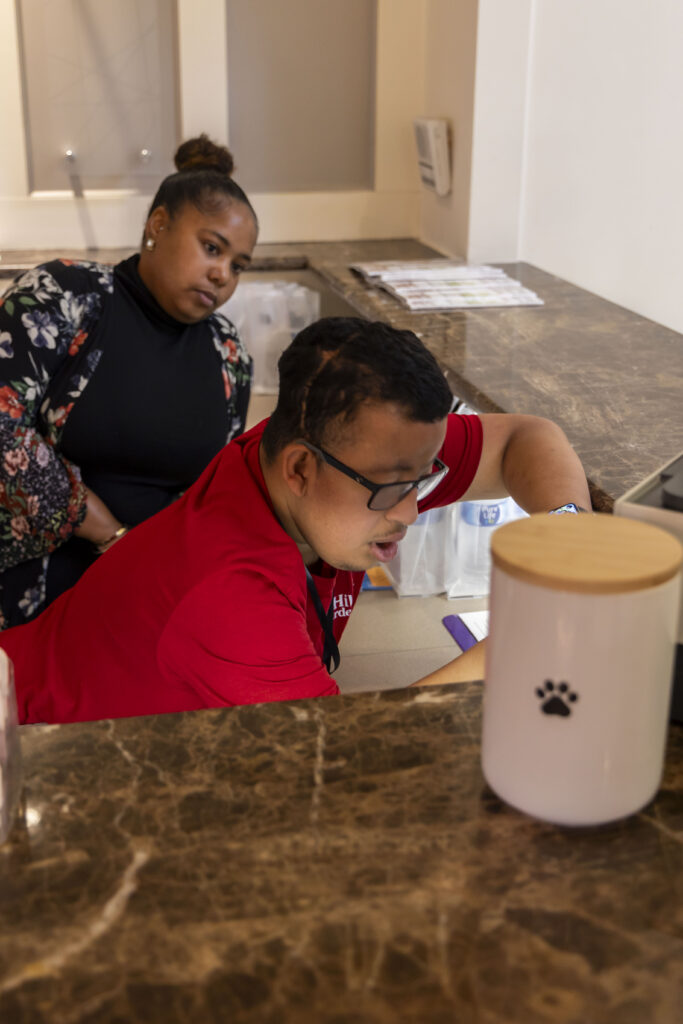
For autistic employees, meaningful work is not just about completing tasks. It is about connection, contribution, and feeling a sense of belonging. As one employee shared,
“My favorite part is bagging because I get to interact with other people and ask them how their day is.”
What stands out is not just the role itself, but the sense of engagement and belonging that comes with it. From the employer perspective, the changes required are often more straightforward than expected. As one employer described,
“Making a few simple adjustments can help teams accommodate different ways of thinking and processing information. For example, use clear, concise language and provide written instructions to complement verbal communication. It’s also important to encourage a culture of patience, allowing extra time for responses.”
These reflections highlight something important; inclusion is not about overhauling entire systems but about making intentional adjustments that allow people to work in ways that align with how they process and communicate.
And when those adjustments are made, the benefits extend far beyond a single employee.
Why Hiring Alone Is Not Enough
Many organizations have taken meaningful steps toward hiring autistic talent, but long-term success is shaped by what happens next. Workplace environments that rely heavily on unspoken expectations or inconsistent communication can create barriers that have little to do with the job itself. Research shows that when expectations are unclear or communication is not accessible, employees are more likely to experience stress and disengagement, regardless of role or ability (World Health Organization, 2024).
For autistic employees, this often requires additional effort to navigate workplace norms, sometimes through masking or constant adaptation. Over time, this can impact both performance and mental health. But when environments are structured with clarity and consistency, that extra layer of effort is reduced. Employees are able to direct their energy toward their work rather than navigating the system itself.
The Business Case for Autism Inclusion
What organizations often discover is that changes made to support autistic employees improve the workplace for everyone. These include clear communication to reduce misunderstandings, structured workflows to improve efficiency, and thoughtful management practices to strengthen team dynamics. These are not autism-specific benefits. They are organizational strengths.
Research supports this broader impact. Companies that embrace neurodiversity initiatives have reported higher levels of innovation, improved problem solving, and stronger employee engagement (Deloitte, 2022).
Inclusion, in this context, is not just a values-driven decision. It is a strategic one.
From Intention to Action
For many organizations, the next step is not deciding whether to prioritize inclusion but understanding how to implement it effectively.
At U Can Employ™, we work with employers to bridge that gap. This includes training leaders, evaluating workplace systems, and identifying where small, intentional changes can make a meaningful difference in both performance and employee experience. For organizations looking to build a stronger foundation, our eCourses provide insight into how autism may manifest itself in the workplace, and how teams can begin to create more supportive environments through practical changes for all. You can also contact our team at ucanemploy@elsforautism.org to learn more about what service may be best for you and your teams!
Ensuring that individuals with autism have access to meaningful employment opportunities is also of equal importance for companies’ success.
Through the Els for Autism Employment Services department, individuals receive support in identifying career paths, developing workplace skills, and securing competitive employment. This includes job placement as well as employer support.
Together, these efforts address both sides of the equation: preparing individuals for employment and preparing workplaces for inclusion.
References
Cope, R., & Remington, A. (2022). The Strengths and Abilities of Autistic People in the Workplace. Autism in adulthood, 4(1), 22–31. https://doi.org/10.1089/aut.2021.0037
Deloitte. (2022). The value of neurodiversity in the workplace. Deloitte Insights. https://www.deloitte.com/us/en/insights/topics/talent/neurodiversity-in-the-workplace.html
World Health Organization. (2024). Mental health at work. https://www.who.int/news-room/fact-sheets/detail/mental-health-at-work