
The Productivity, Retention, and Human Cost of Disconnection at Work
8 December 2025
Filed under: Blog
By: Katie Cappelen – Project Manager at U Can Employ™ powered by Els for Autism®
The strongest organizations are built on a foundation of belonging, where employees feel valued, supported, and connected to their work. When people feel valued, respected, and connected at work, they are more engaged, more motivated, and more likely to bring their full selves to what they do each day. A strong sense of belonging fuels collaboration, trust, and shared purpose.
Workplace belonging has become one of the strongest predictors of employee engagement, loyalty, and performance. However, many employees still feel isolated, overlooked, or hesitant to be themselves at work.
According to data from BetterUp and Harvard Business Review, employees with low belonging experience 77% more stress, 109% more burnout, 153% more loneliness, and 158% more anxiety and depression.
These staggering numbers reveal how deeply disconnection impacts organizational outcomes.
In addition, Cigna’s research shows that employees feeling lonely in the workplace have 45% lower productivity, miss twice as many workdays, and cost organizations over $4,000 per employee per year.
For most HR leaders, this is already cause for concern. But for employees with autism, the effects of feeling disconnected can be even more intensified and often invisible.
Why Autistic Employees Are More Vulnerable to Low Belonging

Despite being highly skilled and deeply committed to their work, many autistic professionals experience a sense of belonging differently. Corporate culture often relies on unspoken norms, social cues, and expectations that do not acknowledge neurodiverse communication or processing styles. For example, differences in processing speed, preference for direct communication, difficulty navigating small talk, or challenges interpreting nonverbal cues can make meetings, feedback conversations, and informal workplace interactions feel unintentionally exclusionary, rather than inclusive.
As a result, many autistic employees:
- mask their authentic behaviors to appear “professional,”
- avoid disclosing their diagnosis for fear of judgment,
- stay silent in meetings or social settings, and
- carry the heavy cognitive load of navigating environments not designed for them.
This means they may experience all the impacts of low belonging at even higher intensities including burnout, stress, isolation, and reduced psychological safety.
And yet, when employees do feel a sense of belonging, the benefits are profound.
According to research, high belonging is associated with 24% more resilience, 36% better overall well-being, 83% more personal growth, and 92% more professional growth.
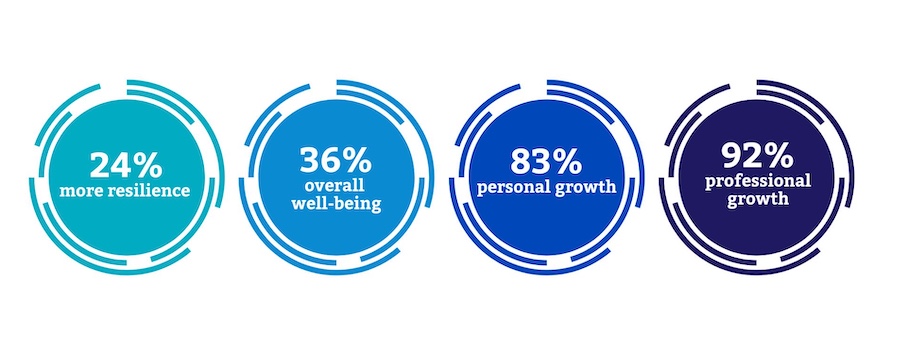
Belonging isn’t just a cultural metric – it directly affects performance, development, and long-term retention.
What This Means for HR & Leadership Going Into 2026
The workplace landscape is shifting. Burnout is rising, remote work has disrupted connection, autism diagnoses are rising, and Gen Z is entering the workforce with higher reported levels of anxiety than previous generations. The Nectar study emphasizes that belonging is a “culture transformation”. It is a fundamental shift toward environments where employees feel seen, safe, and supported, rather than a “surface-level engagement”.
For autistic employees, this means restructuring norms that have historically been barriers, including:
- Flexibility over rigidity – Strict schedules, closed-door communication, or narrow definitions of professionalism can unintentionally exclude neurodivergent talent.
- Psychological safety over performative inclusion – Employees cannot thrive if they fear misunderstanding, bias, or penalization simply for being different.
- Individualized support over one-size-fits-all – Autism is a spectrum. Therefore, support and accommodation should be specific to everyone requesting them, rather than generic.
- Culture design that includes neurodiversity from the beginning – Inclusion should not be an after-the-fact accommodation; it should be embedded into how teams collaborate, communicate, and grow.
The ROI: Belonging Is a Business Strategy – Not a Perk
As HR teams prepare budgets and strategies for 2026, belonging must be treated as a measurable, high-impact business priority.
The Nectar study notes that improved employee connection can save large organizations up to $52 million annually, driven by increases in retention, productivity, and engagement.
Autistic employees may experience more severe impacts from unhealthy workplace cultures. This means that a company’s overall investment in belonging is not only ethical, but strategic. Companies benefit through reduced turnover, increased productivity and innovation, stronger customer and member interactions, healthier teams and reduced burnout, improved employer branding and recruitment success, and more authentic, inclusive company culture.
A Call to HR & Leadership: Belonging Must Be Designed, Not Assumed
Belonging doesn’t happen by accident. It is the result of intentional decisions about leadership, communication, expectations, and employee experience. As we look ahead to 2026, HR leaders have an opportunity, and responsibility, to build workplaces where all employees can thrive.
And for autistic employees, this can mean the difference between silent survival and empowered contribution.
It is time for companies to rethink the norms they’ve inherited, redesign the cultures they maintain, educate staff on autism in the workplace, and create workplaces where neurodivergent employees don’t have to mask, hide, or carry more than their fair share of emotional labor. When employees feel they belong, they don’t just perform better, they stay, grow, and drive organizations forward.
How U Can Employ™ Helps HR Leaders Build Belonging Into 2026 Strategy
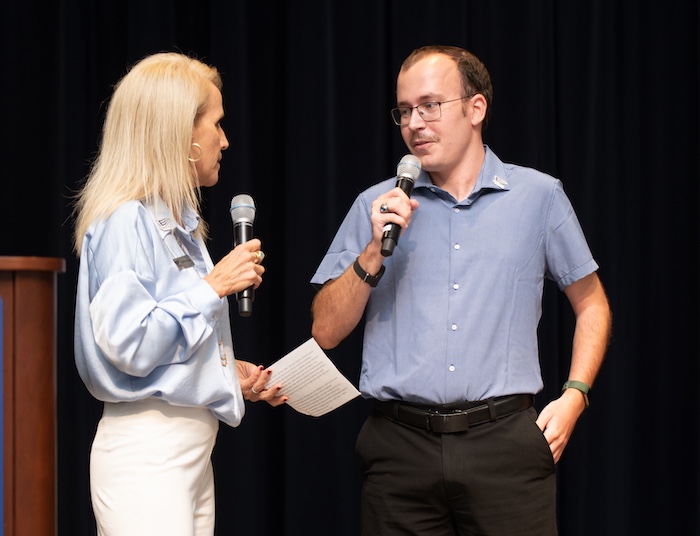
As HR teams begin planning for 2026, belonging must be integrated into organizational design rather than treated as an afterthought. This is especially true for autistic employees and other neurodivergent team members who often face invisible barriers that traditional HR models overlook.
This is where U Can Employ™ (UCE) supports HR leaders in a practical, strategic way. Through site visits, policy reviews, environmental assessments, training, and ongoing guidance, UCE helps companies:
- identify hidden barriers affecting belonging and psychological safety,
- create autism inclusive systems that reduce turnover and improve retention,
- build better HR policies and practices that strengthen connection,
- and design employee experiences that support every individual – without guesswork.
By partnering with UCE, organizations gain a clear, research-backed roadmap for embedding belonging, accessibility, and inclusion into how they hire, onboard, and support employees. It’s a proactive investment that strengthens culture, increases ROI, and helps companies become future-ready as the workforce becomes increasingly neurodiverse.
Belonging doesn’t just benefit employees; it provides companies with the opportunity to transform themselves for their current and future workforces.
References
Nectar. (2024). Workplace Belonging Toolkit. NectarHR.
https://nectarhr.com
BetterUp. (2023). The value of belonging at work: The business case for inclusion and connection. BetterUp Labs. https://grow.betterup.com/resources/the-value-of-belonging-at-work-the-business-case-for-investing-in-workplace-inclusion#:~:text=New%20research%20from%20BetterUp%20proves,decrease%20in%20employee%20sick%20days.
Cigna. (2020). Loneliness and the workplace: 2020 U.S. Report. Cigna. https://legacy.cigna.com/static/www-cigna-com/docs/about-us/newsroom/studies-and-reports/combatting-loneliness/cigna-2020-loneliness-report.pdf
Harvard Business Review. (2021). The value of belonging in the workplace. Harvard Business Publishing. https://hbr.org/2019/12/the-value-of-belonging-at-work